
The Minimum Wage in 2026

At Feel Good Action, we believe in the power of social media to drive real world impact. Each week, we highlight an issue and give our subscribers a tangible call to action. If you’ve been looking for a place to get involved – we’re your one stop shop. Join the movement by subscribing today! Nothing is behind a paywall – paid subscriptions directly support Feel Good Action!
The federal minimum wage is currently $7.25 per hour, and hasn’t been increased since 2009. That means there are teenagers working part-time minimum wage jobs today who were born after the last minimum wage increase. While many states have passed wage increases, those that haven’t default to the federal minimum.
It gets even worse for tipped workers, with the federal minimum wage set at just $2.13 per hour since 1991. The movie Titanic, the Pokemon video game series, and text messaging are all younger than the current tipped minimum wage.
While the cost of groceries, rent, and healthcare continue to rise, wages have largely stagnated – leaving Americans to tighten their belts while corporations boast record profits and job creation.
But before we jump into the current situation with the minimum wage – make sure you check out our friends at ActiVote! Their app was designed to help you plan your ballot! In some states, the question of raising the minimum wage is presented directly to voters. With midterm primaries already in full swing, it’s time to make your voting plan!
The Minimum Wage in 2026
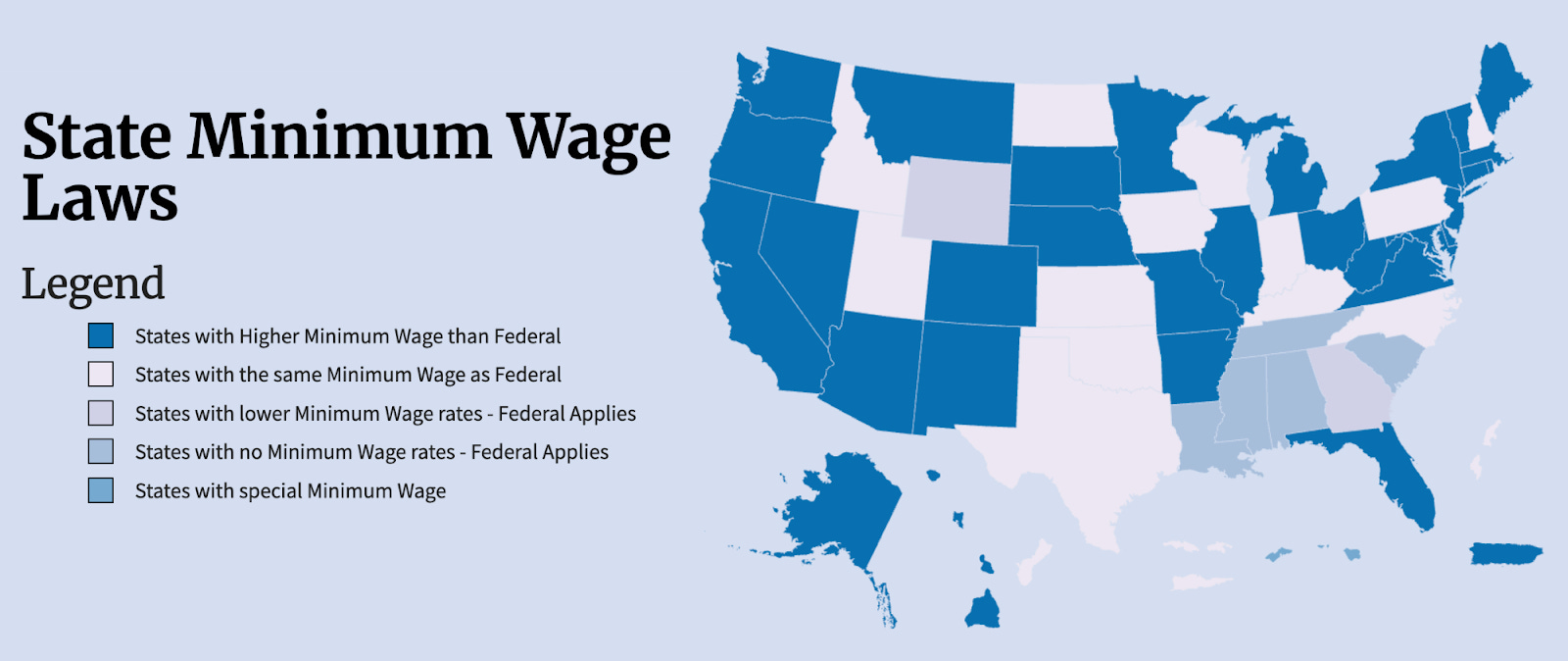
As of 2026, nearly 20 states have no state level minimum wage law (or they have outdated laws set below the federal wage, which is overridden). The outdated pay reflects outdated practices of inequity – an estimated 60-60% of minimum wage workers are women and people of color are more likely to be minimum wage workers, with over half of all Hispanic and Black Americans making less than $15 dollars per hour in the United States.
Those statistics once again worsen with the tipped minimum wage – 65-71% of which are women and 40-50% people of color. These numbers unfortunately track, as American tipping culture is rooted in slavery. Ever wonder why American tipping culture is so bizarre? Tipping workers post Civil War became a way for employers to avoid directly paying for labor – particularly previously enslaved Americans seeking employment. This practice became common throughout the service industry, which continues to predominantly employ women and people of color.
There is good news here – economic pressures such as inflation have driven many states to take action on minimum wage laws. Washington D.C. has a minimum wage of $17.95 per hour (the highest in the nation), followed by the states of Washington ($17.13), Connecticut ($16.94), and California ($16.90). Seven states have also gotten rid of the subminimum/tipped wage entirely (Alaska, California, Minnesota, Montana, Nevada, Oregon, and Washington).
Studies have shown the economic growth of increasing the minimum wage trickles upwards – placing pressure on employers to raise pay rates at higher skilled jobs, but also putting more money into the economy as working class Americans benefit from increased purchasing power.
Still, even states with increased minimum wages don’t always keep up adequately with inflation. The majority of workers on federal assistance programs are making less than $12.16 per hour – nearly double the federal minimum wage, but not enough to afford basic costs of living.
Future Increases to the Minimum Wage
An increase to the federal minimum wage is possible with a House of Representatives, Senate, and President supporting such a measure. We know that in the current climate that feels like a longshot, but with rising economic pressure on Americans, midterm elections are centering in on affordability – and wage increases directly help Americans afford rising costs of living.
But there are other avenues to increasing the minimum wage at the state level. In January, 19 states increased their minimum wage! This year in Oklahoma, voters will be presented a ballot measure to raise the minimum wage to $15 dollars per hour. Additionally, state legislatures have the power to enact state minimum wage laws. Reminder: nearly 20 states have no minimum wage law, set their minimum wage to the federal wage, or have not updated their laws from wages from those set under the federal minimum wage of $7.25 per hour. But in order for your state government to take such action, you will need to vote for local, state, and federal representatives who support minimum wage increases.
Good news – we’ve got an easy tool for you to plan your ballot and do just that!
Already got your ballot planned? Well look at you, ya go-getter. Time to double your impact by sharing this information with a friend!
And as always, stay tuned with FGA for breakdowns on the current state of American politics and weekly calls to action!